 The course · €247 · Yours to keep
The Returning
Six weeks on why it keeps slipping, and what actually makes it stay.
You've had the good week. Usually on holiday, usually around day four, once the work finally stopped and you could feel your own life again.
And then you came home, and some completely ordinary Tuesday happened — nothing dramatic, just a Tuesday — and by Thursday it was gone. And somewhere in there you decided the problem was you. That you're not disciplined enough to hold onto it.
You're not going to like this, but it was never about discipline. You were trying to hold a feeling. Feelings don't survive Tuesdays. What survives is something you build, small, and in a particular order — and almost nobody tells you what the order is.
Recorded, self-paced, yours for good. Nothing expires — and there's a live Q&A with me along the way, if you want it.

You've had the evening where you couldn't eat your dinner.
And that, more or less, is the whole thing.
The school rings at half past ten. One of them has a temperature and needs collecting now. You rearrange four things in ninety seconds, you make the call you couldn't move, you collect the child, and you handle all of it beautifully, because you always do.
And then it's eight in the evening, everyone's fine, and there's a plate in front of you that you genuinely cannot touch. Or it's the row with your husband — the one that was technically over by Tuesday and absolutely wasn't — and you eat, but it tastes of nothing.
Nobody finds that mysterious. Your body was busy. Appetite is a luxury, and luxuries get switched off first.
Here's the part that matters. Your body doesn't keep one switch for the school calling and a different one for the thing you didn't say in the meeting, the invoice that's forty days late, your mother's tone on the phone on Sunday. It's the same switch. And if it's been half-on for years — which, running what you're running, it has — then wanting is idling at about thirty per cent, permanently. Not because you're not ambitious. You're the most ambitious person you know. Because part of you is technically still handling something.
It's a smoke alarm that's slightly too sensitive. It was fitted for good reason and it has saved you more than once. It's just that now it goes off when you make toast, and you've stopped hearing it, and you've built a whole way of living around the noise.
So when the visualising doesn't work, it isn't that you didn't believe hard enough. You were asking a body that's mid-handling to sit down and order dessert.
Which means the fix was never more wanting. It's turning the alarm down first. Then wanting. Then — and this is the one almost nobody gets to — actually being able to take the thing when it arrives.
Three things, and the order isn't negotiable.
I know you'll want to skip to the one that sounds like your problem. Everyone does. But you can't hang a door before there's a wall — ask for what you want while your body's still braced and it comes out as pressure, and try to receive something before you've admitted you want it and there's nothing there to catch it with.
You start at the beginning. If it's not your sticking point, you'll go through it fast. You'll still go through it.
Turning the alarm down
Not therapy, not a crisis. Just the low hum of being slightly on guard that's become so normal you'd call it your personality.
Ten to fifteen minutes a day. And a shorter thing to do on the days it goes badly — because those days come, and I'd rather you had instructions than assumed you'd failed.
Saying what you want
Out loud. To one actual person. Every day.
And I give that person the words for how to answer, which sounds like a small thing and isn't. Tell most people what you want and they immediately try to fix it, or explain why it's tricky. You end up wishing you'd said nothing. That's why you stopped.
Letting it in
Someone pays you a compliment and you've handed it back before they've finished the sentence. Someone offers help and you take about sixty per cent of it.
This is why good things that genuinely arrived never quite landed. We work on staying put while something good is happening — which is much harder than it sounds, and about eight seconds in you'll want to check your phone.
So what's in the box?
- Me, talking you through it. Recorded, in my own voice, ten to fifteen minutes at a time. The longer practices are recorded shorter than the practice itself, so you can pause and stay where you are instead of being hurried along by me.
- A plan for the six weeks. You open it and it tells you what to do today. There's nothing to work out and nothing to assemble.
- The science, explained properly. Meaning: the way I'd explain it to you over a glass of wine, not the way I'd write it for a journal. No jargon. You don't need to know a single medical word to do any of this.
- Everything written down too, for the days you'd rather read than be talked at.
- Something to do when it goes wrong mid-practice. It will, at some point. That's normal and it's covered.
- The Deepening, in the final week — optional, clearly marked, and there for a proper reason. I've explained it below rather than leaving you to guess.
- A live Q&A with me. Somewhere in the six weeks we get on a call together and you can ask me anything you like. Come with a question or come and listen — it's recorded either way, so nothing depends on you being free that evening.
- A last day that tells you what didn't shift. Six weeks doesn't sort out a whole life. I'd rather say so on day forty-two than pretend.

Wait — how's this different from The Capacity Audit?
Fair question, they're the same price. The Audit tells you how much you can currently carry. This one is about what you're able to want, ask for, and let in. Different questions. If you've already done the Audit, this is the practice that comes next.
Pleasure isn't the reward at the end. It's the reading on the dial.
Go back to the evening you couldn't eat. Now think about what happened later, when someone put a hand on your shoulder, or reached for you in the dark.
You either flinched, or you tolerated it kindly and waited for it to finish. Not because you'd stopped loving him. Because there was nothing in you available to receive it with.
That's not a relationship problem. It's the same switch again. Appetite, arousal, being able to be touched and actually feel it — the body treats all of these as surplus. It funds them only once it has decided there's margin. Under pressure they're the first things cut, and they're the last things restored.
Which makes pleasure the most honest instrument you own. It's very difficult to lie to. You can perform calm, and most women in your position perform it extremely well. You cannot perform the capacity to receive.
So The Deepening isn't the racy bit, or the advanced module, or something bolted on because this is a course about femininity. It's the readout. It's how you find out whether you actually came out of survival mode over the six weeks, or whether you simply got better at looking as though you had.
And it's placed last because it only tells you the truth once the other two things are in place. Run it in week one and it measures nothing.
It is optional. It's clearly marked. Nothing else in the course depends on it, and if you'd rather leave it exactly where it is, the six weeks are complete without it.

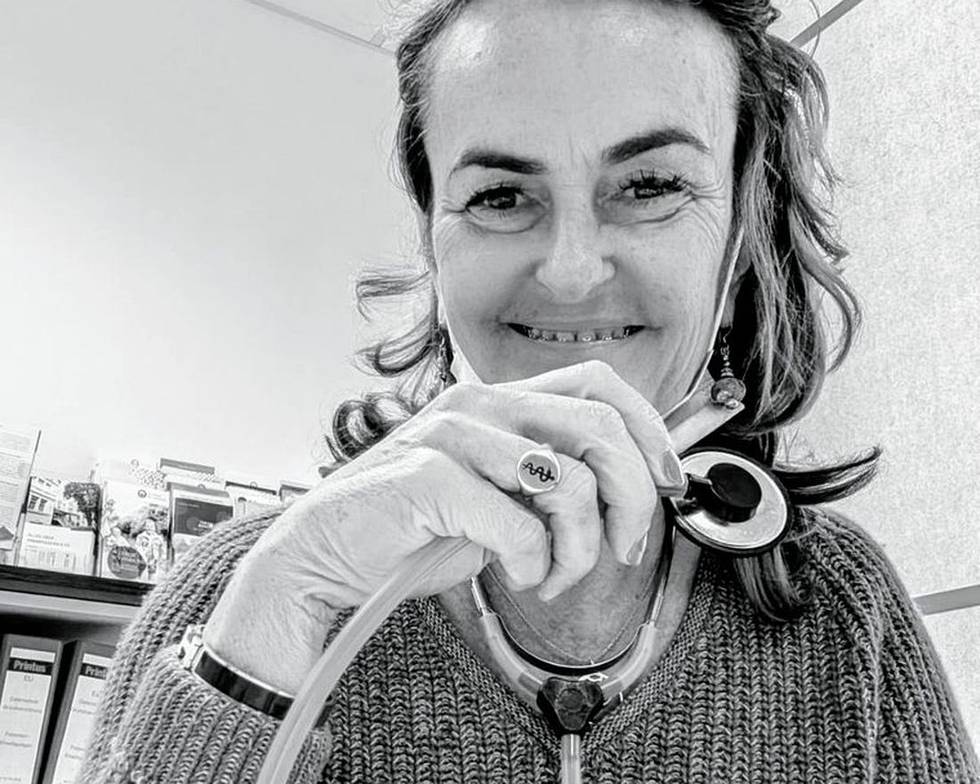
I'm a dermatologist. Skin is where I first saw this, long before I had a word for it.
Most of my clinical life is ordinary, serious medicine. Eczema and psoriasis. The autoimmune conditions. Hair loss, acne, the skin cancers and the surgery that goes with them — which is a large part of any dermatologist's week, whatever people imagine we do all day. I hold medical licences in three countries and I've treated well over twenty thousand patients. I say that so you know what kind of ground this is coming from.
and autoimmune
Switzerland, United Arab Emirates
And inside all of that, one particular woman kept appearing.
The eczema that flares the month the marriage comes apart. The psoriasis that behaves for two years and then doesn't, in a week she can date exactly. The hives before the audit, patch test clean, nothing to find. The woman whose list of foods she can no longer tolerate gets longer and longer while every allergy test comes back normal — because it isn't an allergy. Her body has quietly narrowed what it's willing to take in.
None of that is imaginary and none of it is her fault, and I want to be careful here: I am not telling you that stress causes these conditions. What I am telling you is that after enough years you can see, on skin, when a woman's system has been running defended for a long time. It is visible. It was visible to me thousands of times before I had any language for it.
And she was always the same woman. Capable, well-organised, running a great deal, completely exhausted. Her results were fine. Nothing to find, have a good holiday. Then back six months later, still exhausted, slightly embarrassed for taking up my time.
I could treat what was on her skin, and I did, properly, and it worked. What I couldn't reach in a fifteen-minute appointment was the thing underneath it — that she'd been handling everything at that pitch for years, and the alarm had been going the entire time, and she'd stopped being able to hear it.
So I went outside my own field to look for it. Certified as a coach, spent years in the holistic work I'd been drawn to since long before it was respectable, and put the two together. That's all this course is: what I would say to that woman if I had six weeks with her instead of a quarter of an hour.
The Returning
Six weeks, recorded, at your own pace, with a live Q&A with me somewhere along the way. Most women go round the three a second time, and it's a completely different experience — because the first one lands on a body that's already been through the other two.
One payment · Straight in · Yours to keep, for good